Life - Teaching of Two...
Kou Hong, a renowned Chinese master, was known by his pen name of Pau Po Tzu, the one who embraces the simple essence.
By discovering the essence of universal spirituality, one is better able to develop one's own spiritual knowledge and experience.
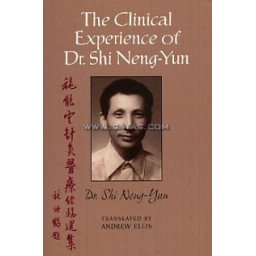
Hundreds of empirically proven acupuncture / moxibustion formulas for common symptoms and disease entities. Source materials abstracted from Jin, Yuan, Ming, and Qing Dynasty classics. Categorized by body part for easy access. Comprehensive symptom index included.
The jacket of the book has been damaged. Part of that, the book is in good condition.
The author, John Kotsias, is my good friend. I know that he is a linguist, a professor of mathematics, a passionate martial artist, an exceptional practicing humanist. He combines these attributes with an obsessive desire to widen the spectrum of Tai Chi Ch'uan without sacrificing the classical virtues.
In the West people commonly assume that disruptions of the body are the exclusive domain of medical intervention and that disruptions of the mind are to be addressed primarily by psychological inquiry. This work is a discussion on the integration of the principles of TCM and psychosomatics. It develops a dynamic model of health that acknowledges the connection of body and mind.
Chen-Chiu: A New Healing Paradigm is based on an historic Chinese acupuncture text that remains vital to this day: the Ling-Shu-Jing. Dr. Claus Schnorrenberger, who has produced a well-known translation of Ling-Shu-Jing, here applies his personal medical experience -- as a lecturer, and moreover, as an orthodox Western physician and Chinese acupuncturist/herbalist -- to the principles of...
This combined coloring workbook and study guide is an excellent tool for anyone who is learning basic human anatomy and physiology.
The main difficulty facing the newcomer to acupuncture is deciding where to place the needles. There is a bewildering range of possibilities, including traditional acupuncture, the use of trigger points, and the segmental approach.
At a time when interest in Chinese medicine is increasing in popularity, this is a lay-person’s guide to understanding the workings of the body, detecting imbalances and self healing, and an excellent guide to finding and working with a practitioner.
The text organizes and examines the fundamental theories of acupuncture according to the different Yijing perspectives of The One, Two Poles, Four Signs, and Eight Trigrams.
A glossary that presents all the Chinese terms (in Chinese characters and in Pinyin script) that are relevant to TCM and provides their English translations. It also provides an explanation of how, for example, the location or the function of an acupuncture point can be concluded from its name.